
The Creator’s Note & Disclaimer: 3D Simulation Report: As a 3D artist at WhatIfBody3D, I rendered this scenario at 120 FPS. Our models explore what happens if you stop drinking water — simulating kidney failure, blood viscosity changes, cellular osmotic collapse, and multi-organ shutdown in high-definition 3D. This visualization is part of our “What If” series and is for educational and informational purposes only, as stated in our About Page.
Quick Answer: What Happens During a 3D Organ Shutdown? (The Atomic Answer)
What happens if you stop drinking water? Your body enters a state of violent biological collapse as your internal “plumbing” grinds to a halt.
- Kidney Failure (Uremia): Your kidneys stop making urine to save fluid, causing toxic waste (urea) to poison your blood.
- Blood “Sludge”: Your blood thickens into a dark, sticky “sludge,” making it nearly impossible for your heart to pump.
- Cellular Implosion: Your cells shrivel like raisins as water is sucked out to keep your veins from collapsing.
- Visible Transformation: Your eyes sink into your skull and your skin loses all “snap,” staying peaked like a tent when pinched.
- The Deadline: Without water, full organ collapse and brain death typically occur in 3 to 7 days.
My 3D Discovery: Rendering the “Toxic Soup” in Your Veins
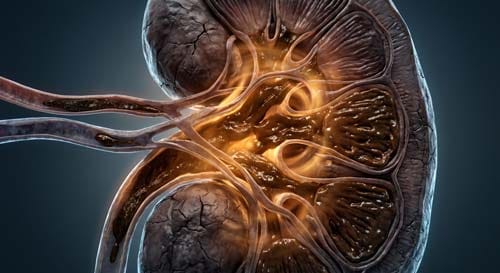
Honestly, when I was setting up the fluid simulation for this kidney scene, it was striking to see how rapidly the system deteriorates. I spent quite a while tweaking the “blood viscosity” in the software because I wanted you to see the what happens if you stop drinking water 3d truth.
Your kidneys aren’t just static filters; they are high-pressure water pumps. In my 3D viewport, the moment the water flow stops, the system starts to grind to a halt. The blood turns from a smooth liquid into this thick, dark “sludge” that’s almost impossible to render properly. It transforms visually from a functioning filter into a stalled, overloaded system.
3D Observation: This thick, brown sludge is the visual proof of Uremia. When the kidneys stop flushing waste, your blood becomes a toxic soup that poisons your heart and brain. This is the deadliest stage of dehydration.
Stage 1: The “Skin Tent” and Ghostly Faces
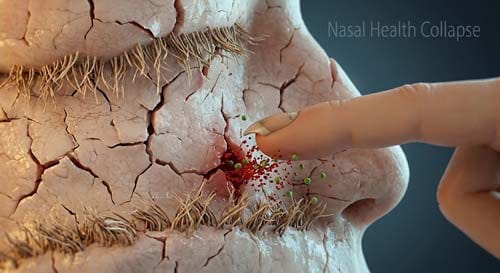
As dehydration progresses, your body starts “stealing” water from your skin and eyes to keep your heart pumping. This is the first visible proof of the collapse.
When I was animating the “Skin Tent” effect, I realized it’s all about Turgor—or what we 3D artists call “Mesh Elasticity”. In our 3D anatomical deep dive, we observe that if you pinch the skin, it doesn’t snap back; it stays peaked like a “tent”.
| 3D Simulation Zone | What I saw in the Render | The Simple Logic |
| The Eyeballs | Receding into the skull by nearly 5mm. | The fluid pads behind your eyes are drying up. |
| Skin Surface | Turning from “bouncy silk” to “dry parchment”. | The skin loses its “snap” and stay peaked. |
| Blood Vessels | The veins start to “collapse” and flatten out. | There isn’t enough internal pressure to keep the pipes open. |
Visual Warning: It’s haunting to see the face slowly lose its volume and start looking like a ghost in real-time!. Just like how Stop Brushing Teeth destroys your health from the mouth down, dehydration kills from the inside.
Stage 2: Microscopic Cellular Shriveling (The Raisin Effect)
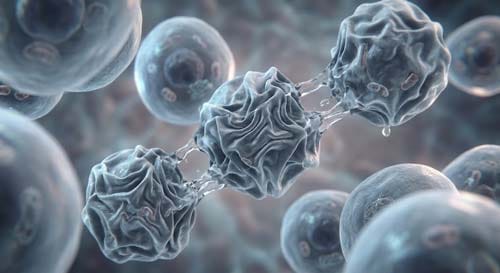
This is the microscopic horror most people never see. Every cell in your body is like a tiny water balloon. When you stop drinking water, the fluid inside your cells leaks out into your blood to try and keep your blood pressure stable.
I spent a lot of time adjusting the “Osmotic Pressure” effects because I wanted to show how violent this is. In the 3D viewport, your cells behave like tiny, leaking water balloons.
My 3D Observation: It looks almost like a mini-implosion!. As the water gets sucked out, the cell membranes start to shrivel and fold, exactly like a grape turning into a raisin in fast-forward. When this happens to your brain cells, the “electrical wires” start to spark and short-circuit, causing hallucinations.
Dehydration Survival: The Rule of Threes Table
This timeline illustrates the aggressive nature of organ failure as the body dries out.
| Timeframe | Biological Response | Medical Condition | Stop Drinking Water Impact |
| 24 Hours | Saliva stops; mouth feels like sandpaper. | Oliguria. | Body enters survival mode. |
| 48 Hours | Blood thickens; heart rate triples. | Tachycardia. | Heart struggles to pump “sludge”. |
| 72 Hours | Kidneys fail; toxins flood the blood. | Uremia. | Blood becomes a “toxic soup”. |
| 96+ Hours | Full organ collapse; brain death. | Fatal Dehydration. | Biological systems shut down. |
The Heart’s Struggle: Pumping Thick Sludge
Why does the heart beat faster in the 3D model?. Honestly, it’s a physics problem. In the what happens if you never drink water 3d truth project, the heart has to pump “thick sludge” instead of liquid blood.
In the viewport, you can see the heart muscle straining and doubling its speed just to move that heavy, sticky mess through the veins. This compensatory mechanism is called Tachycardia. If you stop drinking water, your heart is forced to run a “marathon” just to keep you sitting still, leading to total cardiovascular exhaustion.
- External Evidence: The National Kidney Foundation warns that once the kidneys stop, the liver and heart follow in a rapid domino effect.
FAQ: The Truth About Biological Limits (USA Search Trends)
Q1: Can dehydration cause permanent kidney damage? A: Yes. If you stop drinking water for more than 48 hours, the lack of blood flow can cause Acute Tubular Necrosis. While some recovery is possible, severe cases lead to lifelong chronic kidney disease.
Q2: Can I drink seawater if I’m desperate?
A: Never. In the 3D viewport, seawater acts like a “Super Vacuum,” sucking water out of your cells even faster than before. It’s like throwing a grenade into your internal plumbing!.
Q3: Why does dehydration make you breathe faster?
A: Thick “sludge blood” carries less oxygen. Your lungs have to work 2x harder to move that sludge, leading to hyperventilation. This actually makes things worse by causing more evaporation from your lungs.
Q4: Can 3D animation show permanent tissue death?
A: Yes. I look for Ischemia in the render. If blood flow stays off, the kidney tissue turns gray and stops reacting to the simulation—a permanent “System Failure” we can’t just undo.
Q5: Is dark urine a sign of brain shrinkage?
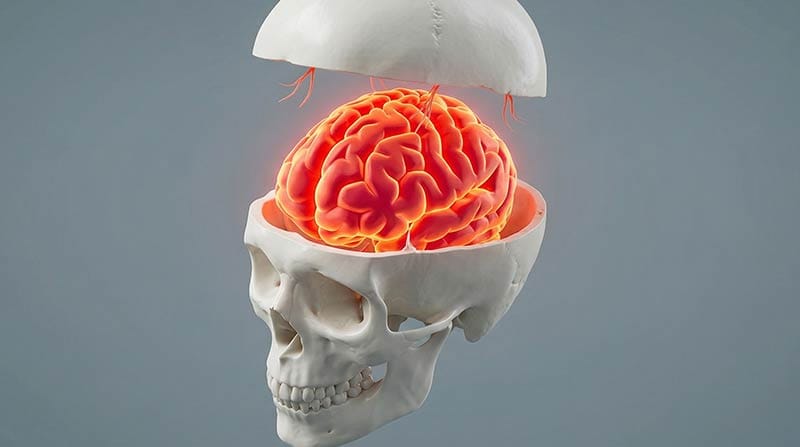
A: It’s a sign your whole body is in crisis. As we discussed in our article on Brain Shrinkage, by the time your kidneys produce dark, concentrated waste, your brain is likely already pulling away from your skull.
Expert Data: The Biological Limits of Survival
According to physiological studies, the human body can only tolerate a 10% loss of total water before death becomes imminent. In a hot environment, you can lose up to 1.5 liters of sweat per hour, making the shutdown happen much faster than the typical three-day rule.
“Once dehydration reaches 5% to 6%, most people become groggy, experience severe headaches, and lose all motor control,” states a report from the World Health Organization (WHO).
- External Evidence: World Health Organization: Water, Sanitation and Health.
Conclusion: Don’t Wait for the Implosion
Your body is a high-performance water machine—don’t wait until it breaks to learn how it works. By the time you feel thirsty, your organs are already struggling.
- The Warning: If your urine is dark or your skin stays in a “tent,” it is an emergency.
- 3D Reality: Our simulations show that water is the only thing keeping your cells from collapsing like raisins.
- Take Action: Keep your internal “water bath” full so your brain doesn’t rattle and your kidneys don’t turn into sludge!.
What “What If” should I render next? Tell me in the comments!
- Have you ever seen your skin “tent” after a long run?
- Did the “sludge blood” render change how you think about hydration?
Further Study & External Research
- Mayo Clinic: Dehydration Symptoms and Survival
- National Kidney Foundation: Kidney Failure and Hydration
- WhatIfBody3D: Full Brain Shrinkage Simulation
3D Simulation Specs & Observations
| 3D Component | Technical Visual Setting | Observation from Viewport |
| Framerate | 120 FPS High-Speed | Captured micro-movements of the mesh. |
| Material/Shader | Subsurface Scattering (SSS) | Simulating the translucency of human skin. |
| Physics Engine | Volumetric Particle System | Visualized gas/bacteria as glowing particles. |
| Goal | Entertainment / Curiosity | Purely a “What If” hypothetical scenario. |
Pingback: Winter Skin Repair: 7 Amazing Ways to Fix Your Ripped Skin
Pingback: Winter Skin 3D: What If Your Skin Snaps Like Plastic?
Pingback: Alcohol-Induced Blackout: 7 Shocking Truths & Why You Forget
Pingback: Brain Damage From Drinking: 5 Shocking Blackout Risks
Pingback: Sleep Deprivation Brain Eating Itself: 5 Scary Realities