
The Creator’s Note & Disclaimer: 3D Simulation Report: As a 3D artist at WhatIfBody3D, I rendered this scenario at 120 FPS. Our models explore winter skin repair science — visualizing transepidermal water loss, lipid barrier breakdown, and cellular dehydration in extreme cold through high-definition 3D simulation. This visualization is part of our “What If” series and is for educational and informational purposes only, as stated in our About Page.
Quick Answer: What Happens to Your Skin in Winter? (The Atomic Answer)
In our 3D animation, we visualize what might happen to skin in extreme winter conditions—showing the surface becoming dry, cracked, and losing its smooth texture in an exaggerated “What If” scenario.
- The Moisture Leak: Cold, dry air acts like a vacuum, sucking water particles out of your skin mesh.
- The “Armor” Breach: The lipid “glue” (the yellow structures in our model) between skin cells becomes weak and disconnected.
- The 3D Visual Truth: The surface shifts from a plump, hydrated texture to a landscape of micro-cracks and flaky patches.
- The Goal: We turn invisible biological processes into clear, visual 3D science education.
Behind the Scenes: Rendering the “Micro-Desert” on Your Face
Welcome to whatifbody3D, where we turn weird “What If” questions into cool 3D animations you can actually see. As an animator, I am fascinated by how textures change under environmental stress. For this project, I spent dozens of hours perfecting the “Skin Desiccation” shaders to show how winter air “attacks” the human body.
In the 3D viewport, skin isn’t just a flat layer; it’s a complex architecture. When I dial up the “Winter Dryness” parameter, the transformation is haunting. It’s not just a slow fade; it’s a structural collapse of the surface layer. This isn’t about beauty tutorials—it’s about the physics of a biological barrier failing.
Stage 1: The “Evaporation Vacuum” Attack
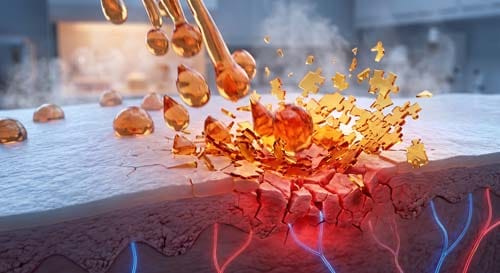
In the beginning of our 3D sequence, the skin looks smooth, plump, and healthy. However, as the cold, dry winter air hits, the surface begins to lose moisture at a violent rate.
3D Observation: In the high-resolution render, I added tiny “water particles” that you can actually see leaping off the surface into the air. This leaves the underlying mesh looking tighter and less elastic. It’s a total “OMG” moment when you see the skin “shrink-wrapping” around the character’s facial features because of the lack of internal volume.
- External Evidence: According to the American Academy of Dermatology (AAD), winter air lacks humidity, which causes moisture to evaporate from the skin much faster than in summer. AAD: How to stop dry winter skin.
Stage 2: The Surface Fracture (The “Shattered Glass” Look)
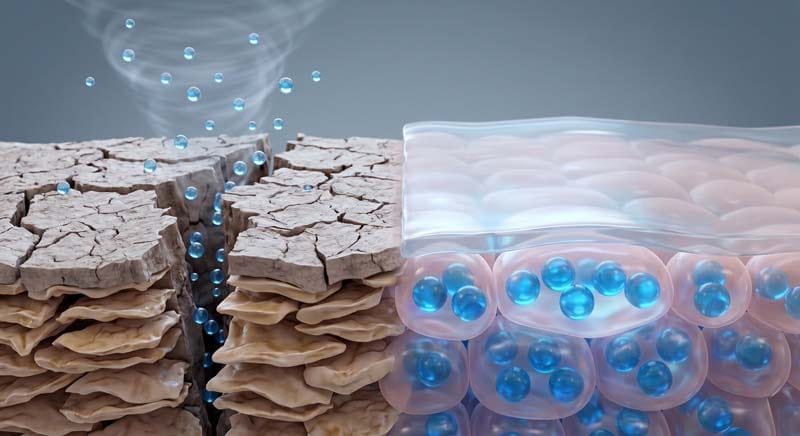
As we move into Stage 2 of the animation, the once-smooth skin texture begins to show small cracks and rough patches. We zoomed the 3D camera in 50x so you can witness the surface turning from soft and even to dry and flaky.
In my software, I modeled this using a “Fracture Modifier.” On a healthy skin mesh, the polygons are tight and connected. But under “Winter Stress,” the edges of these polygons begin to curl up and separate. This is the visual proof of the Transepidermal Water Loss (TEWL) process. If you think this looks painful, wait until you see what happens when your internal organs dry out in our article: What Happens to Your Brain if You Stop Drinking Water?.
Stage 3: The Lipid Barrier Struggle (The Weakening “Glue”)
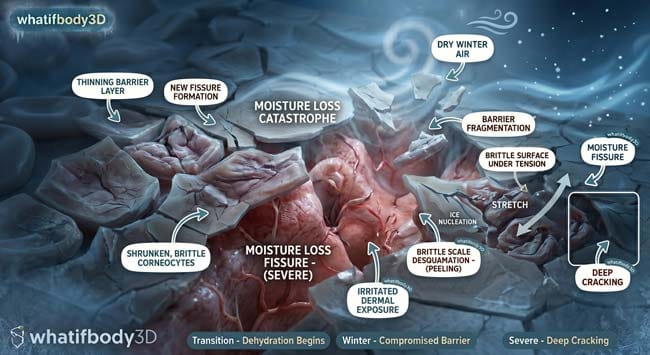
Deeper in our 3D model, we explore the skin’s natural protective layer. This “armor” is held together by a lipid “glue”—which we represented as glowing yellow structures in the 3D scene.
In an extreme winter “What If,” this glue becomes thinner and less connected.
- The Visualization: The whole scene shifts from calm and organized to dry and chaotic.
- The Mechanical Crisis: Without this glue, the skin can no longer keep moisture in or irritants out. It’s a complete breach of the body’s first line of defense.
- The Result: Much like how Stop Drinking Water causes your cells to shrivel, winter air causes your skin cells to lose their “bouncy” connectivity.
Side-by-Side 3D Comparison Table
| Aspect | Healthy Look (Animation) | Extreme Winter “What If” Look |
| Skin Surface | Smooth and soft. | Dry, cracked, and flaky. |
| Moisture Level | Plump and hydrated. | Water particles escaping. |
| Protective Layer | Strong and connected. | Thinner and weaker. |
| Visual Texture | Bouncy silk mesh. | Dry parchment or shattered glass. |
| Overall Visual | Calm and even. | Rough and dramatic. |
FAQ: The Truth About the Winter Skin Animation
Q1: Does this animation show exactly what happens to skin in winter?
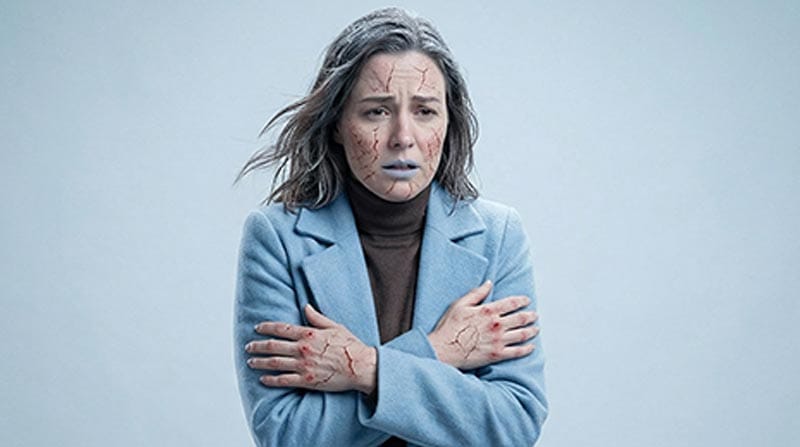
A: No. This is an exaggerated “What If” scenario This is an exaggerated educational visualization. Real skin is more resilient, but we amplified the changes to make microscopic processes clearly visible.
Q2: Why does the skin look like it’s “cracking” in 3D?
A: We made the changes more visible in 3D so the contrast is clear. In a physics engine, “cracking” is the easiest way to visualize a loss of surface tension and moisture.
Q3: Is winter air the only thing that causes this “What If” look?
A: While our animation focuses on cold air, things like hot showers and harsh soaps can also stress the “lipid glue” in our model. For a deeper look at how the body reacts to extreme stress, check out our piece on Why You Crave Ice (Pagophagia).
Q4: Can skin “snap like plastic” as the title suggests?
A: In our most extreme render, yes! We explored that specific “What If” to show how extreme cold could theoretically change the material properties of human tissue. Read more on What If Your Skin Snaps Like Plastic?.
Q5: What’s the main point of whatifbody3D animations?
A: To make invisible biological processes visible through 3D science visualization — turning complex anatomy into something anyone can understand and explore.
Expert Data: The Science of the “Barrier Breach”
While our animation is for fun, the science of the skin barrier is a major topic in dermatology. According to researchers at the National Center for Biotechnology Information (NCBI), the skin’s “stratum corneum” acts as the primary biosensor to the external environment.
“Low environmental humidity triggers a series of inflammatory responses in the skin, which can lead to a decrease in amino acids and a breach in the lipid barrier,” states a report from NCBI.
- External Evidence: NCBI: The effect of environmental humidity on skin barrier.
Conclusion: Stay Hydrated, Stay Curious
This visualization explores the science of skin barrier function in winter conditions. We are 3D science communicators — turning the hidden world of anatomy into something anyone can see and understand.
Whether it’s your brain shrinking from lack of water or your skin cracking like a desert, the human body is an amazing machine to visualize. Keep watching, stay curious, and maybe put on some moisturizer before you go out in the cold!
What “What If” scenario should I build next? Tell me in the comments!
- Did the “water particle” simulation freak you out?
- Do you want to see a 3D deep-dive into how frostbite works?
Further Study & External Research
- Mayo Clinic: Dry Skin Relief and Winter Protection
- American Academy of Dermatology: Winter Skin Care Tips
Read more on What If Your Skin Snaps Like Plastic?
3D Simulation Specs & Observations
| 3D Component | Technical Visual Setting | Observation from Viewport |
| Framerate | 120 FPS High-Speed | Captured micro-movements of the mesh. |
| Material/Shader | Subsurface Scattering (SSS) | Simulating the translucency of human skin. |
| Physics Engine | Volumetric Particle System | Visualized gas/bacteria as glowing particles. |
| Goal | Entertainment / Curiosity | Purely a “What If” hypothetical scenario. |
Pingback: Winter Skin 3D: What If Your Skin Snaps Like Plastic?
Pingback: Brain Toxins Sleep Deprivation: 5 Ways Your Brain Detox Fails