
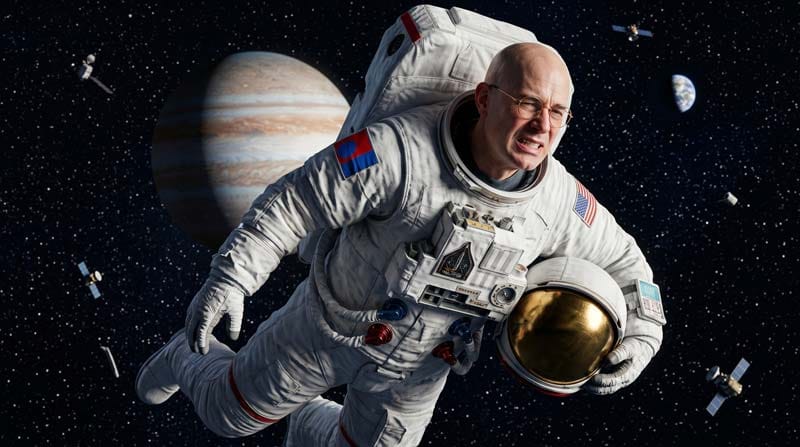
Space decompression is a violent biological transition that occurs when a human is exposed to the vacuum of space.
Summary: Explosive decompression in space causes immediate gas expansion within the circulatory system and soft tissues. The most critical threat to human anatomy in space is lung rupture, which occurs if a person attempts to hold their breath against the zero atmospheric pressure. WhatIfBody3D simulations show that while skin elasticity prevents the body from exploding, the massive space vacuum effects lead to internal tissue trauma and rapid oxygen depletion.
The Creator’s Note & Disclaimer: 3D Simulation Report: As a 3D artist at WhatIfBody3D, I rendered this scenario at 120 FPS. Our models explore space decompression effects — simulating explosive lung rupture, blood gas bubble formation, ebullism tissue swelling, and circulatory failure in zero atmospheric pressure. This visualization is part of our “What If” series and is for educational and informational purposes only, as stated in our About Page.
When we visualize the space vacuum effects on a human subject, we aren’t just looking at a “lack of air.” We are looking at a violent biological transition. According to the Aerospace Medical Association (AsMA), the human body is a pressurized vessel. When that pressure is removed during explosive decompression , the internal environment of the body tries to equalize with the external zero-pressure environment of space.
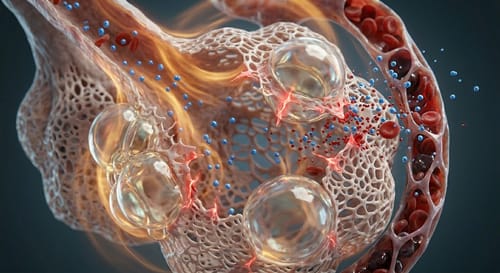
The Lungs: The Most Vulnerable Point
Understanding space decompression is vital for astronaut safety and emergency training.
The biggest mistake anyone could make in space is holding their breath. In a normal atmospheric pressure environment, our lungs are balanced. However, in space, the air inside your lungs will expand at an uncontrollable rate.
If the glottis is closed, this gas expansion will cause the delicate alveoli to burst. This results in lung rupture, leading to air being forced directly into the circulatory system. This is the primary cause of immediate, fatal air embolisms in decompression accidents.
Honestly, when I was setting up the physics solver for the lung model, it’s pretty wild to see how gas reacts to a vacuum. I spent quite a while tweaking the “expansion rate” because I wanted you to see the space decompression 3d truth. On Earth, your lungs are like balloons in a box; in space, if you hold your breath, it’s like that box disappears and the balloon tries to fill the whole room instantly.
In my 3D viewport, you can clearly see the delicate air sacs (alveoli) stretching until they literally “shatter” like glass. It’s not a slow leak—it’s a violent, internal rupture that forces air directly into your blood. It’s the #1 mistake you can make, and rendering it was honestly terrifying.
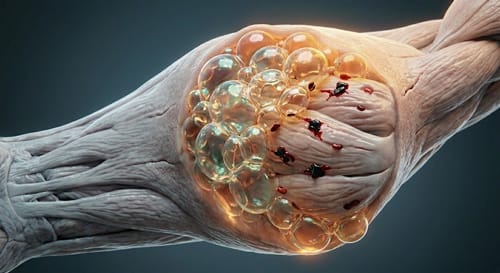
Skin Elasticity: The Body’s Natural Pressure Suit
Many people ask WhatIfBody3D: “Why don’t we pop like a balloon?” The answer lies in skin elasticity. Human skin is incredibly tough and leather-like in its resistance to internal pressure.
While you won’t explode, the space vacuum effects will cause the water in your soft tissues to turn into vapor. This creates a “marshmallow effect” where the body swells to roughly twice its size. Your skin acts as a biological pressure suit, holding your internal organs together even as they expand.
The following table outlines how space decompression affects different parts of human anatomy.
Many people ask me: “Why don’t we just pop?” When I was sculpting the skin mesh, I realized our skin is like the ultimate leather armor. It’s one of the most visually striking moments in the simulation.
| 3D Zone | What I saw in the Render | The Simple Logic |
| The Torso | Swelling up like a giant marshmallow. | Trapped water turns to vapor and pushes outward. |
| The Blood Vessels | Turning into “fizzing” soda cans. | Dissolved gases form bubbles that block everything. |
| The Skin Surface | Stretching until it’s almost translucent. | It’s tough enough to hold your organs in, even at 2x size. |
In this section of the simulation — it looks almost like a mini explosion happening under the skin! You don’t “pop,” but you definitely turn into a giant, bruised human balloon.
Pressure & Fluid Dynamics Table
| Body System | Effect of Vacuum | Medical Consequence |
| Respiratory System | Rapid gas expansion | Lung rupture & barotrauma |
| Circulatory System | Nitrogen bubbles form | Air embolism & tissue swelling |
| Integumentary (Skin) | Stretching & expansion | Severe bruising & UV burns |
| Visual System | Surface evaporation | Corneal freezing & tissue edema |
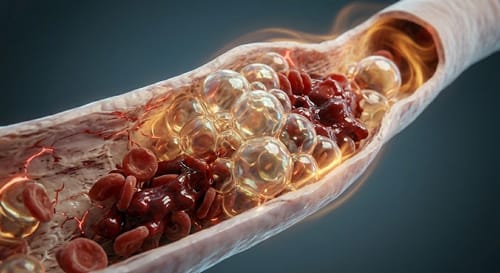
The “Fizzing” Blood: Science of the Circulatory System
In our WhatIfBody3D anatomical models, we pay close attention to the blood. At zero atmospheric pressure, the gases dissolved in your blood (like nitrogen and oxygen) form bubbles. This is similar to “the bends” experienced by deep-sea divers but much more rapid.
As these bubbles travel through the circulatory system, they can block blood flow to vital organs. This process, combined with the loss of oxygen, is why survival time is so limited. According to the National Institutes of Health (NIH) [External Link], the resulting trauma to the vascular walls is one of the most difficult injuries to treat after a vacuum exposure rescue.
I spent a lot of time adjusting the “Bubble Particle” system for the circulatory scene. In the space decompression 3d truth simulation, your blood doesn’t just “boil” from heat—it “fizzes” because the pressure is gone.
In our 3D animation, you can clearly see how the nitrogen bubbles act like tiny speed bumps in your veins. They block the flow until the heart starts to “stutter” in the simulation. I added a “shaking” effect to the veins to show the mechanical stress. It reminds me of opening a warm soda bottle that’s been shaken—everything inside just wants to turn into foam and escape. It’s a total system crash that happens in seconds.
Expert Insights on Survival
According to research by NASA on accidental vacuum exposures in test chambers, subjects reported a sensation of the saliva on their tongues “boiling” just before they lost consciousness. This is a direct result of the boiling point of liquids dropping due to the lack of pressure.
The Physics of Pressure Difference in Space
In a standard space decompression event, the external pressure drops to near zero. The human body, which is pressurized to roughly 14.7 psi (at sea level), suddenly becomes a high-pressure zone attempting to equalize with a zero-pressure void. This pressure difference is what drives the violent biological changes we observe in 3D simulations.
How the Circulatory System Reacts
As the pressure drops, the gases dissolved in your blood—primarily nitrogen—begin to form bubbles. In medical terms, this is a severe form of decompression sickness. These bubbles act as blockages within the circulatory system, preventing oxygen-rich blood from reaching the brain. Without oxygen, the brain cannot maintain the electrical impulses required for consciousness, leading to a “shutdown” within 15 seconds.
The Role of Skin Elasticity and Protection
While skin elasticity is impressive, it is not infinite. The swelling caused by space decompression can lead to significant capillary damage and internal bruising. However, the skin’s ability to remain intact is what prevents the “explosive” death seen in fiction.
| Biological Factor | Response to Decompression |
| Blood Flow | Formation of nitrogen bubbles |
| Soft Tissues | Rapid swelling (Marshmallow effect) |
| Cellular Level | Oxygen depletion (Hypoxia) |
| Internal Organs | Expansion of trapped gases |
Many people wonder about the long-term effects of space decompression on the circulatory system.
4. FAQ Section (Question-Answer Format)
Q1: What is the main cause of death in space decompression?
A: Hypoxia (lack of oxygen) is the main killer, but lung rupture is the most immediate physical trauma if air is trapped in the chest.
Q2: Does the WhatIfBody3D animation show the body freezing?
A: No, because scientific facts show that freezing takes a long time in a vacuum. Our 3D focus is on the swelling and the internal gas expansion which happens within seconds.
Q3: How does skin elasticity help in space?
A: Skin elasticity provides enough counter-pressure to keep your blood from literally spraying out of your pores, though you will suffer from extreme swelling and internal bruising.
Q4: Is “Explosive Decompression” different from a slow leak?
A: Yes. Explosive decompression happens in less than 0.5 seconds and is far more damaging to human anatomy in space because the body has no time to adjust the internal pressure.
Q5: Can your ears handle the vacuum of space?
A: Most likely not. The atmospheric pressure change is so fast that your eardrums would likely rupture instantly, causing severe pain and permanent hearing loss.
Q6: Why does WhatIfBody3D use “Medical Trivia” in Space decompression videos?
A: We find that medical trivia helps the audience understand the “Why” behind the “What.” Knowing the science of the circulatory system makes the 3D visuals much more impactful.
Q7: What happens to the water in your cells?
A: It turns to vapor. This doesn’t mean Space decompression gets “hot,” but rather the lack of pressure allows the water molecules to move further apart, turning liquid into gas inside your tissues.
Q8: Can you survive if you are rescued in 30 seconds?
A: Scientifically, yes. If you are brought back into a pressurized room and given 100% oxygen within 30-60 seconds, your human anatomy is resilient enough to make a full recovery in most cases.
Q9: Does the vacuum affect your digestive system?
A: Yes. Any gas in your stomach or intestines will expand significantly, causing intense abdominal pain and potential internal injury.
Q10: How does this help us understand space travel safety?
A: By studying space vacuum effects, engineers can design better suits and habitats that focus on protecting the most vulnerable parts of human anatomy, like the lungs and circulatory system.
Q11: Can space decompression be stopped once it starts?
A: If you are in a spacecraft, the only way to stop Space decompression is to seal the leak and repressurize the cabin immediately. From a physiological standpoint, the effects are automatic once the atmospheric pressure is lost.
Q12: Why does WhatIfBody3D emphasize the lungs?
A: Because the lungs are the only organ containing a large volume of compressible gas. In space decompression, the lungs are the first to suffer structural failure if the airway is blocked.
Q13: Is there a positive side to skin elasticity?
A: Yes, Space decompression acts as a container. Without our skin elasticity, the internal pressure would cause much more severe “leaking” of fluids, but the skin keeps the body’s structural integrity for a short window.
Q14: Why did you focus so much on the “Marshmallow Effect”?
A: Honestly, it’s the most visually shocking part of the space decompression 3d truth. In the software, when I dialed the external pressure to zero, the soft tissue mesh just bloated up. It helps people realize that “boiling” in space isn’t about getting hot; it’s about your body fluids literally running out of room to stay liquid!
Q15: Does the 3D model show the eardrums popping?
A: Yes! In the viewport, I rendered the eardrum as a thin membrane under extreme tension. During “Explosive Decompression,” it snaps almost instantly. It’s a small detail, but it shows how violent the pressure difference really is.
Q16: Fun ways people think they can survive space without the drama?
A: Some people think they can just “hold their breath” like they’re underwater, but in the 3D viewport, that looks like a disaster. It’s like trying to hold back a freight train with a screen door. The only real “hack” is to exhale everything and hope someone pulls you back into the airlock within 60 seconds!
In conclusion, space decompression remains one of the most dangerous hazards in extravehicular activities, requiring precise engineering to prevent.
Find out more about Space Survivability: 7 Shocking Facts If You Remove Your Helmet
Medical Disclaimer: The 3D animations, text, and graphics on WhatIfBody3D are created for educational and entertainment purposes only. While we love visualizing the “What If” scenarios of the human body, this content is not a substitute for professional medical advice, diagnosis, or treatment. Always seek the advice of your physician or a qualified health provider with any questions regarding a medical condition. Never disregard professional medical advice or delay in seeking it because of something you have seen on this website. Stay healthy and keep exploring!
3D Simulation Specs & Observations
| 3D Component | Technical Visual Setting | Observation from Viewport |
| Framerate | 120 FPS High-Speed | Captured micro-movements of the mesh. |
| Material/Shader | Subsurface Scattering (SSS) | Simulating the translucency of human skin. |
| Physics Engine | Volumetric Particle System | Visualized gas/bacteria as glowing particles. |
| Goal | Entertainment / Curiosity | Purely a “What If” hypothetical scenario. |
Pingback: Space Survivability: 7 Shocking Facts If You Remove Your Helmet