Stop Drinking Water: What Happens to Your Brain? (3D Stages)

TL;DR: If you stop drinking water, your body enters a state of emergency within hours. Your blood becomes thick like sludge, making it hard for your heart to pump. Most shockingly, your brain actually shrinks and pulls away from your skull. Without hydration, your organs shut down, leading to death in as little as three to seven days.


The Science of Dehydration: Why Your Brain Shrinks

When you stop drinking water, you aren’t just thirsty. You are drying out from the inside. As shown in our 3D medical simulation, water makes up about 75% of your brain. When that water disappears, your brain can’t keep its shape.

Honestly, when I was setting up the soft-body physics for this brain model, it’s pretty wild to see how much water matters. I spent quite a while tweaking the “volume” settings because I wanted to show you the stop drinking water 3d truth. Your brain isn’t a solid rock; it’s more like a giant, firm jelly. In my 3D viewport, the moment I dialed down the “hydration” parameter, the whole mesh started to sag and cave in. It looks less like a vital organ and more like a piece of fruit rotting in the sun. It’s a total “OMG” moment when you realize that 75% of that “jelly” is just water, and without it, the structure simply fails.

Stage 1: Brain Shrinkage (The “OMG” Moment)

This is the most terrifying part. As you lose fluid, your brain tissue literally loses volume and shrinks. Because your skull is hard and doesn’t move, your brain begins to pull away from the bone. This physical pulling is what causes the blinding “dehydration headaches” you feel.

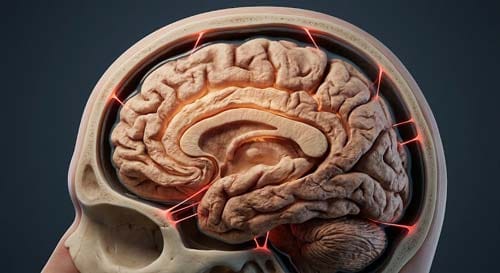
Our 3D anatomical deep dive reveals the microscopic gaps forming between your brain and your skull. Your brain is literally rattling around in your head. This isn’t just a theory—it’s a physical breakdown of your most important organ.

When I was animating the gap between the brain and the skull, I had to zoom in 20x to get the “pulling” effect right. It’s the most terrifying part of the stop drinking water 3d truth.

3D medical simulation of brain shrinkage due to dehydration showing brain tissue pulling away from the skull bone

When I was setting up the soft-body physics for this brain model, it’s pretty wild to see how much water matters. I spent quite a while texturing the gap between the brain and the skull because I wanted you to see the stop drinking water 3d truth. It’s not just “dry”—it’s a structural failure. In my 3D viewport, the whole mesh started to sag and cave in. It looks almost like a mini-implosion!

3D Simulation ZoneWhat I saw in the RenderThe Simple Logic
The GapA literal 2-3mm void opening up.Your brain is shrinking, but your skull isn’t.
The Fluid CushionThe “Clear Water” layer dries up.The hydraulic shock absorber for your brain is gone.
The NervesRed “tension lines” stretching to the limit.This “pulling” is why your head feels like it’s in a vice.

Watch this part of the animation—it looks almost like a mini-implosion! Because there’s no more cushion, your brain starts to “rattle” inside. It’s like putting a marble in a metal box and shaking it.

Dehydration Impact: The Brain-Body Collapse Scale

Time Without WaterBrain ConditionPhysiological TermStop Drinking Water Impact
12 – 24 HoursMild cognitive fogHypohydrationReduced focus and reaction time
48 HoursBrain tissue shrinkageCerebral AtrophyBrain pulls away from the skull bone
72 HoursHallucinationsDeliriumSevere neural signaling failure
96+ HoursOrgan shutdownMultisystem FailureBlood becomes thick like sludge

Stage 2: Sludge-Like Blood and Heart Strain

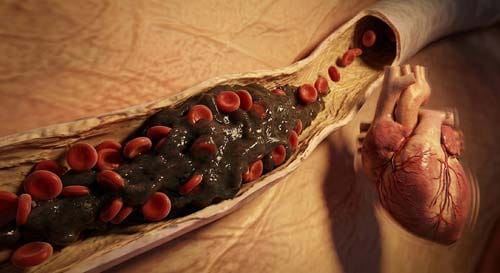
Water is the main ingredient in your blood. When you stop drinking water, your blood volume drops and it becomes thick and sticky—like sludge.

According to medical research from the Mayo Clinic, this makes your blood pressure drop, but your heart has to work twice as hard to push that “sludge” through your veins. You might feel your heart racing as it struggles to send oxygen to your organs. If this continues, your heart simply gives out from the sheer effort of pumping thick blood.

According to the American Heart Association, maintaining blood volume is essential. When you stop drinking water, your plasma volume drops, creating a state of hypovolemia. This makes your blood so thick that your heart struggles to push oxygen to your brain cells, accelerating the damage of stop drinking water.

This physical pulling of the brain away from the skull is the most painful biological result of the decision to stop drinking water. As fluid levels drop, the Cerebrospinal Fluid that cushions your brain disappears, leading to intense intracranial pressure changes. This is the scientific reality of stop drinking water for more than two days.

3D micro-sculpt showing blood cells thickening into a dark sludge-like texture due to extreme water loss

I adjusting the “Blood Viscosity” particles for this scene. In the stop drinking water 3d truth simulation, your blood stops flowing like a river and starts moving like thick, dark lava. In our 3D animation, you can clearly see the heart muscle straining—it looks like a pump trying to push wet cement through a tiny straw. I added a “shaking” effect to the heart model to show the stress. This isn’t just a slow-down; it’s a mechanical crisis.

While many seek dehydration headache relief with pills, the only true cure is rehydrating the brain tissue before it shrinks too far.

In our 3D animation, you can clearly see the heart muscle straining—it looks like a pump trying to push wet cement through a tiny straw. I added a “shaking” effect to the heart model to show the stress. This isn’t just a slow-down; it’s a mechanical crisis. Your blood gets so “sticky” that it literally starts to clog the very pipes it’s supposed to keep clean. It’s one of the most violent things I’ve ever had to render.

3. The Neurochemical Chaos of Dehydration

Beyond the physical shrinkage, when you stop drinking water, the chemical balance of your brain reaches a breaking point. Water is the medium through which essential Electrolytes like sodium and potassium travel to fire your neurons. Without sufficient fluid, your brain cells experience a “short circuit.”

This state triggers an emergency release of Vasopressin, a hormone that tries to prevent any further water loss. However, high levels of vasopressin also constrict blood vessels, further reducing the oxygen supply to your already struggling brain tissue. This dual attack—physical shrinkage combined with chemical imbalance—is the hidden danger that occurs every hour you stop drinking water.

4. Toxin Buildup: The Brain’s Dirty Exhaust

Your brain has its own waste-clearance system called the Glymphatic System, which relies entirely on fluid flow to “wash” your brain while you sleep. When you stop drinking water, this cleaning process grinds to a halt. Metabolic waste products, such as Amyloid-beta, begin to accumulate in the brain tissue. This toxic buildup causes the extreme confusion and “brain fog” associated with severe dehydration, proving that the decision to stop drinking water is essentially a decision to poison your own nervous system.


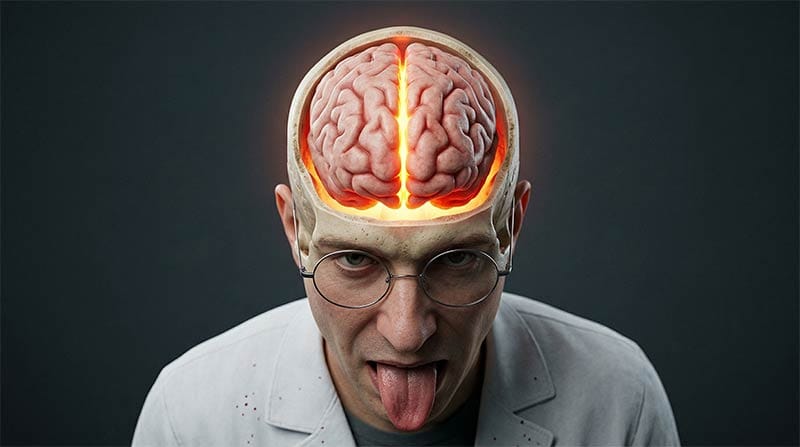
3D medical animation showing what happens if you stop drinking water

Dehydration Impact: A Side-by-Side Comparison

Body PartCondition: HydratedCondition: Stop Drinking WaterMedical Impact
BrainPlump and fits skull tightlyShrinks and pulls awayIntense headaches & confusion
BloodFlows easily like waterThickens like sludgeExtreme heart strain & low BP
KidneysFilters waste into clear urineShuts down to save waterToxin buildup & organ failure
SkinElastic and smoothLoses turgorDryness and cracking

5. The Breach of the Blood-Brain Barrier (BBB)

One of the most terrifying, yet invisible, consequences of the decision to stop drinking water is the weakening of the Blood-Brain Barrier. This specialized layer of cells is designed to protect your brain from toxins and pathogens in the blood. However, as dehydration causes your brain tissue to shrink, the mechanical stress can cause tiny gaps to form in this protective shield.

When you stop drinking water and reach a state of chronic dehydration, inflammatory markers in the blood can leak into the brain. This leads to Neuroinflammation, which is why extreme dehydration often results in lasting irritability and mood disorders. By the time you feel the urge to stop drinking water and transition into a state of severe thirst, your brain’s primary defense mechanism is already under heavy siege.

6. Intracranial Pressure and the “Ghost Concussion”

Your brain floats in a protective bath of Cerebrospinal Fluid (CSF). This fluid acts as a hydraulic shock absorber. When you stop drinking water, the volume of this “protective cushion” drops significantly. This creates a state of Intracranial Hypotension.

In this state, even minor head movements can cause the shrunken brain to bump against the internal ridges of the skull. This is effectively a “ghost concussion”—brain trauma caused not by an external hit, but by the lack of internal fluid support. This explains the excruciating, throbbing pain that defines a dehydration-induced migraine. Every hour you stop drinking water, you are removing the only safety padding your most vital organ has.

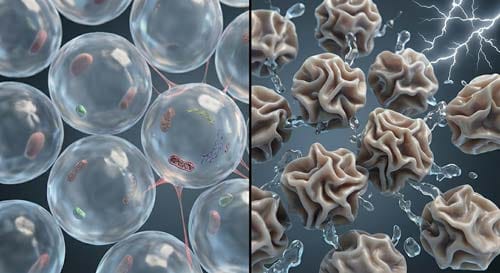
3D micro-sculpt showing healthy plump cells shrinking into shriveled raisin-like shapes during the stop drinking water 3d truth experiment

The “Osmotic Pressure” effects in the software because I wanted to gross myself out. In the stop drinking water 3d truth simulation, your cells behave like tiny, leaking water balloons. Watch this part of the animation—it looks almost like a mini-implosion! As the water gets sucked out into the bloodstream, the cell membranes start to shrivel and fold. Behind the shriveled cells, I modeled the flashing light effects to show the electrical signals short-circuiting—it’s your brain literally starving for a drink


The Kidney Crisis: Filtering the Sludge

As the dehydration worsens, your kidneys are the next to suffer. When you stop drinking water, your kidneys try to save every drop of fluid to protect your brain. However, this means they stop filtering the toxins out of your blood.

Eventually, the “sludge-like” blood becomes too thick for the kidneys to handle. This leads to acute kidney failure. Without water, your body becomes poisoned by its own waste products. This is why doctors at Healthline warn that hydration is a matter of life and death, not just comfort.

The symptoms of chronic dehydration aren’t just thirst; they include persistent brain fog and a literal decrease in brain volume shown in 3D scans.

When people ask how much water to drink daily, the answer depends on your activity, but the goal is to prevent the ‘sludge blood’ effect.

The positive effects of water on brain function are immediate—proper hydration keeps your neural pathways firing at full speed.


FAQ: The Hidden Dangers of Dehydration

Q1. How long can a human survive if they stop drinking water? A: You can only last three days without water in most conditions. While some might last a week in perfect environments, by day three, your organs are already beginning to fail due to hypovolemia.

Q2. Why does my pee turn dark when I am dehydrated? A: This is your kidneys trying to save your life. When they sense you have stopped drinking water, they excrete a highly concentrated waste called bilirubin, turning urine dark amber or brown.

Q3. Can you die from drinking too much water? A: Yes! This is hyponatremia(water intoxication). It happens when you drink so much water that it dilutes the sodium in your blood, causing cells to swell—the opposite of shrinking, but just as deadly.

Q4. Does coffee count as water intake? A: While coffee contains water, caffeine is a diuretic. If you only drink coffee and stop drinking water, you might dehydrate faster because you are losing more fluid than you are gaining.

Q5. Can your brain grow back after shrinking? A: Yes, if caught in time! Once you rehydrate, brain cells expand back to normal. However, severe dehydration can cause permanent organ damage or even a stroke if the brain pulls too hard on the connecting nerves.

Q6. Why does urine turn dark amber? A: This is your kidneys’ last-ditch effort. When they sense you have decided to stop drinking water, they produce Urochrome in high concentrations to save every drop of fluid for your heart.

Q7. Is thirst the first sign of brain shrinkage? A: No. By the time you feel thirsty, you are already about 1% to 2% dehydrated. The process of stop drinking water impact on the brain has already begun.

Q8: Why did you show the “Ghost Concussion” in the video? A: Honestly, I wanted to show the stop drinking water 3d truth of what happens when you just walk around while dehydrated. Without that “water bath” (CSF), every step you take sends shockwaves directly into your brain tissue. In the viewport, you can see the shrunken brain bumping against the internal ridges of the skull. It’s like a concussion without actually hitting your head on anything!

Q9: Can 3D scans really see the brain “grow back”? A: Pretty much! In the software, when I “re-hydrated” the mesh, the cells plumped back up like a dry sponge in a sink. But the stop drinking water 3d truth is that if you do this too often, you get “gliosis”—which I modeled as gray, non-stretchy scar tissue. Once that scar tissue forms, that part of your brain “mesh” is basically frozen forever.

Q10: Fun ways people try to “Hack” hydration without the drama? A: Some people think they can just drink 5 cups of coffee, but in the 3D viewport, that looks like a disaster. Caffeine acts like a “leak” in the system, forcing water out even faster. In the render, I showed the “water particles” flying out of the body at 2x speed. It’s better to just stick to the plain stuff if you want to keep your brain from rattling!


Irreversible Neural Scarring: The Long-Term Cost

We must move past the myth that rehydration instantly fixes everything. If you stop drinking water frequently enough to cause repeated brain shrinkage, you risk Gliosis—a type of scarring in the central nervous system. This occurs when neurons die from lack of oxygen and are replaced by non-functional scar tissue.

Chronic dehydration has been linked by research to an accelerated decline in Executive Function, which includes your ability to plan, focus, and multitask. The cumulative effect of choosing to stop drinking water over many years may contribute to early-onset cognitive decline, proving that hydration is not just a daily necessity, but a long-term investment in your mental longevity.

Summary: Your Body is a Water Machine

Don’t wait for your brain to start pulling away from your skull.

  • Watch for the signs: Dark urine and “brain fog” mean you are already in trouble.
  • 3D Reality: Our simulations show that water is the only thing keeping your brain from rattling in your skull.
  • Internal Warning: Chronic dehydration is a silent killer, much like how Can Gum Disease Cause Heart Attack affects your heart from the inside.

Medical Disclaimer: The 3D animations, text, and graphics on WhatIfBody3D are created for educational and entertainment purposes only. While we love visualizing the “What If” scenarios of the human body, this content is not a substitute for professional medical advice, diagnosis, or treatment. Always seek the advice of your physician or a qualified health provider with any questions regarding a medical condition. Never disregard professional medical advice or delay in seeking it because of something you have seen on this website. Stay healthy and keep exploring!

Leave a Comment

Your email address will not be published. Required fields are marked *

Scroll to Top