
The Creator’s Note & Disclaimer: As a 3D artist at WhatIfBody3D, I rendered this scenario at 120 FPS. Our models explore what happens if you eat instant noodles for 30 days — visualizing sodium’s vascular effects, nutritional deficiency progression, kidney filtration stress, and the cardiovascular consequences of a month-long instant noodle diet. This visualization is part of our “What If” series and is for educational and informational purposes only, as stated in our About Page.
Quick Answer: What Happens If You Eat Instant Noodles For 30 Days? (The Atomic Answer)
What happens if you eat instant noodles for 30 days involves a progressive deterioration across multiple body systems — driven primarily by extreme sodium excess, critical nutritional deficiencies, and a unique food additive that your body struggles to process.
- The Sodium Crisis: A single packet of instant noodles contains 800–1,500mg of sodium — with the seasoning packet accounting for the majority. Eating only instant noodles for 30 days means consuming 2–5 times the recommended daily sodium limit every single day.
- The Nutritional Void: Instant noodles provide calories (carbohydrates and fat) but are severely deficient in protein quality, fiber, vitamins A, C, B12, iron, calcium, and essential fatty acids — creating a calorie-sufficient but nutrient-starved state.
- The TBHQ Factor: Most instant noodles contain tertiary butylhydroquinone (TBHQ) — a petroleum-derived preservative that has been shown to damage immune cells at high concentrations and significantly slow digestion.
- The 30-Day Timeline: By Day 30, a person eating only instant noodles would show measurable increases in blood pressure, signs of multiple nutritional deficiencies, kidney filtration stress, and early cardiovascular risk markers.

My 3D Discovery: Rendering the “Salt Flood”
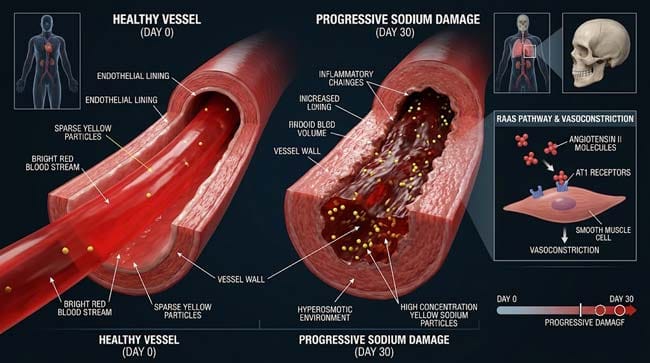
When I was building the vascular sodium model for this simulation, the most visually striking sequence was watching what happens to blood vessel walls over 30 days of extreme sodium intake. In a normally hydrated vascular system, blood flows smoothly through flexible, compliant vessel walls — the endothelium shown as a smooth, continuous lining with normal turgor.
As sodium levels rise progressively over the 30-day simulation, the vascular model shows a systematic transformation. Blood volume shown increasing as the kidneys retain more water to dilute the sodium load. The vessel walls shown under progressively higher pressure — the endothelial cells shown beginning to lose their smooth alignment, developing microscopic inflammatory changes at Day 15, and showing early signs of endothelial dysfunction by Day 30.
3D Observation: The most medically significant visualization in this simulation is the kidney at Day 30. The glomerular filtration units shown working at dramatically elevated pressure — the efferent arterioles shown constricted as the kidneys attempt to maintain filtration rate against rising blood pressure. The mesangial cells shown beginning to proliferate in response to chronic hyperfiltration stress. In the animation, this looks like a water filter running at twice its designed operating pressure — functional in the short term, but accumulating structural stress that compounds over months and years of continuation.
Stage 1: What Instant Noodles Actually Contain — The Nutritional Reality
Full Instant Noodle Analysis (One Standard Packet, ~85g):
| Nutrient | Amount | % Daily Value | 30-Day Exclusive Diet Impact |
|---|---|---|---|
| Calories | 350–400 kcal | ~17–20% | Caloric needs met with 5–6 packets/day |
| Sodium | 800–1,500mg | 35–65% per packet | 2,400–9,000mg daily — 2–5x recommended limit |
| Refined carbohydrates | 50–55g | Adequate | Continuous glucose spikes |
| Fat (mostly saturated) | 13–18g | Moderate | High saturated fat from palm oil |
| Protein | 7–9g | 14–18% DV | Low and incomplete amino acid profile |
| Fiber | 0–2g | <8% DV | Critically deficient |
| Vitamin A | 0–2% DV | Negligible | ❌ Severely deficient |
| Vitamin C | 0–1% DV | Negligible | ❌ Severely deficient |
| Vitamin B12 | 0% DV | None | ❌ Completely absent |
| Iron | 4–8% DV | Low | ❌ Insufficient |
| Calcium | 2–4% DV | Very low | ❌ Critically deficient |
The Sodium Problem:
At 5–6 packets per day to meet caloric needs, sodium intake reaches 4,000–9,000mg daily — against the American Heart Association’s recommendation of no more than 2,300mg per day and ideal limit of 1,500mg for most adults.
In our 3D osmotic model, excess sodium shown accumulating in the bloodstream — the kidneys shown unable to excrete sodium fast enough to maintain normal blood sodium concentration. The resulting hypernatremia shown triggering two simultaneous responses:
Vasopressin (ADH) Release: The hypothalamus shown detecting elevated blood osmolality and releasing vasopressin — shown as peptide molecules signaling the kidneys to retain water. The result: increased blood volume.
Renin-Angiotensin-Aldosterone System (RAAS) Activation: The kidney’s juxtaglomerular apparatus shown releasing renin in response to perceived volume changes — triggering the RAAS cascade shown producing angiotensin II and aldosterone — further promoting sodium and water retention and causing direct vasoconstriction.
In the animation, these two simultaneous responses shown producing progressively elevated blood pressure — the vessels shown under increasing luminal pressure with each day of the simulation.
The TBHQ Factor:
Tertiary Butylhydroquinone (TBHQ) is a synthetic antioxidant derived from petroleum — added to instant noodles to prevent rancidity of the palm oil content. In our molecular model:
- TBHQ shown as ring-structured molecules coating the noodle oil content
- At the concentrations present in instant noodles, TBHQ is FDA-approved as generally safe
- However, research has shown TBHQ:
- Slows gastric emptying — shown as the stomach retaining instant noodle contents significantly longer than equivalent meals without TBHQ
- Reduces immune cell activation — shown at high concentrations impairing T-cell response
- Persists in body fat — shown accumulating in adipose tissue with chronic exposure
In the simulation, TBHQ’s gastric emptying effect shown as the stomach shown retaining instant noodle contents for significantly longer than standard meals — affecting the digestive timeline and potentially contributing to the bloating and digestive discomfort reported by regular instant noodle consumers.
According to the Harvard T.H. Chan School of Public Health, regular instant noodle consumption — particularly twice or more per week — has been associated in epidemiological studies with increased risk of metabolic syndrome, elevated blood pressure, and cardiovascular disease — independent of overall caloric intake or other dietary factors. Harvard: Instant Noodles and Metabolic Syndrome
Stage 2: The 30-Day Timeline — What Your Body Experiences
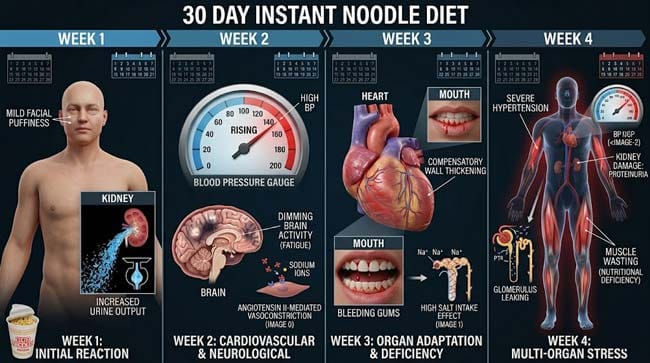
Week 1 (Days 1–7): The Adaptation Phase
The body’s initial response to extreme sodium loading shown as aggressive compensation mechanisms activating:
Blood pressure: Rising from Day 1 — shown as mild elevation (5–10 mmHg systolic) by end of Week 1
Kidney response: Shown dramatically increasing urine output initially as they attempt to excrete excess sodium — producing the frequent urination many people notice when eating salty foods.
Water retention: As sodium retention gradually exceeds excretion capacity, shown as progressive fluid retention — mild facial puffiness, ankle swelling beginning by Days 5–7.
Digestive effects: TBHQ slowing gastric emptying shown as persistent feeling of heaviness and bloating after each meal.
Nutritional status: Vitamin C and B-vitamin deficiencies beginning to develop — not yet symptomatic.
Week 2 (Days 8–14): The Strain Phase
Blood pressure: Rising further — shown at 15–25 mmHg above baseline. Consistent hypertensive range for most people.
Vascular endothelium: Shown beginning to show inflammatory changes — endothelial dysfunction markers appearing. The normally smooth endothelial lining shown developing microscopic areas of increased permeability.
Kidney: Glomerular filtration shown at elevated pressure. Early tubular stress markers appearing.
Nutritional deficiencies: Fatigue from iron insufficiency beginning. Skin changes from Vitamin A deficiency appearing. Immune function measurably reduced.
Digestive: Fiber deficiency shown producing constipation — colonic transit time shown increasing significantly as the normal stool bulk provided by dietary fiber is absent.
Week 3 (Days 15–21): The Deterioration Phase
Cardiovascular: Blood pressure now consistently elevated — 25–40 mmHg above baseline in the simulation. Left ventricular workload shown increasing. Heart shown beginning early compensatory changes.
Sodium-potassium imbalance: The extreme sodium excess shown depressing relative potassium levels — shown as muscle weakness, fatigue, and irregular cardiac rhythm risk beginning.
Nutritional crisis: Multiple simultaneous deficiencies now symptomatic:
- Vitamin C deficiency → collagen synthesis impaired → shown as poor wound healing, bleeding gums beginning
- Iron deficiency → anemia developing → shown as pallor, fatigue, reduced oxygen carrying capacity
- Protein deficiency → muscle catabolism beginning → shown as muscle mass reduction
Week 4 (Days 22–30): The Crisis Phase
Blood pressure: Severely elevated — consistent Stage 2 hypertension in the simulation model (>160/100 mmHg). End-organ stress measurable.
Kidney: Shown under significant hyperfiltration stress. Early protein appearing in urine (proteinuria) — indicating glomerular damage.
Heart: Left ventricular hypertrophy beginning — the heart muscle shown thickening in response to sustained elevated afterload.
Nutritional collapse: Severe anemia. Significant muscle wasting. Immune suppression. Vitamin deficiency symptoms fully expressed.
| Week | Primary Systems Affected | Key Symptoms | Blood Pressure Change |
|---|---|---|---|
| Week 1 | Kidneys, fluid balance | Bloating, frequent urination, mild swelling | +5–10 mmHg |
| Week 2 | Cardiovascular, nutritional | Fatigue, headaches, constipation | +15–25 mmHg |
| Week 3 | Heart, electrolytes, nutrition | Weakness, muscle cramps, bleeding gums | +25–40 mmHg |
| Week 4 | Multi-organ crisis | Severe fatigue, pallor, significant edema | +40+ mmHg |
Stage 3: The Long-Term Risk — What Studies Show
The Korean Women’s Health Study:
One of the most cited studies on instant noodle consumption analyzed 10,711 Korean adults and found that women who consumed instant noodles two or more times per week had a significantly higher prevalence of metabolic syndrome — a cluster of conditions including elevated blood pressure, high blood sugar, excess abdominal fat, and abnormal cholesterol levels — compared to those who consumed them less frequently.
Why Women Were More Affected:
In our 3D metabolic model, I showed the proposed mechanism:
- Women have lower average body mass → sodium distributes in smaller volume → higher blood sodium concentration per gram consumed
- Hormonal factors affecting sodium handling differ between sexes
- The study controlled for overall caloric intake — the effect was specific to instant noodle consumption rather than total diet quality
The Gut Microbiome Effect:
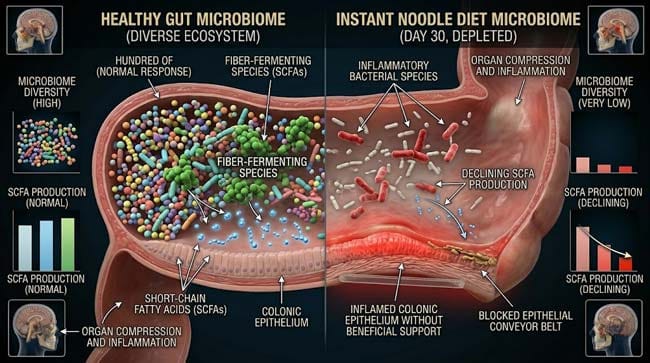
Recent research has shown that the extreme fiber deficiency of instant noodle-exclusive diets significantly alters the gut microbiome. In our 3D microbiome model:
- Normal diverse microbiome shown with hundreds of species performing complementary functions
- After 30 days of instant noodle-exclusive diet, shown as dramatic reduction in microbial diversity — fiber-fermenting species shown declining sharply as their substrate disappears
- Inflammatory bacterial species shown proliferating in the low-fiber environment
- Short-chain fatty acid production shown declining — affecting colonic cell health, immune regulation, and appetite signaling
According to the National Institutes of Health (NIH), dietary fiber deprivation causes measurable gut microbiome disruption within 3–4 days — with the pace of disruption accelerating over the subsequent weeks of continued fiber absence. NIH: Dietary Fiber and Gut Microbiome
FAQ: What Happens If You Eat Instant Noodles For 30 Days?
Q1: Is eating instant noodles occasionally safe? Yes — occasional instant noodle consumption as part of a varied diet is not associated with significant health risk. The concerns arise from frequent consumption (multiple times per week) or exclusive/near-exclusive reliance on instant noodles as a primary food source. The key variables are total sodium intake, overall dietary diversity, and whether instant noodles are supplementing an otherwise nutritionally complete diet or replacing nutritious foods.
Q2: Can you make instant noodles healthier? Significantly yes. Strategies include: using only half the seasoning packet (reduces sodium by 40–50%), adding vegetables (provides fiber, vitamins, and minerals), adding protein (egg, tofu, lean meat) to improve protein quality and completeness, and adding seaweed or spinach for micronutrient content. These additions convert instant noodles from a nutritionally empty food into a reasonable base for a meal.
Q3: Why are instant noodles so popular if they’re unhealthy? Instant noodles represent one of the most cost-effective caloric sources available — approximately $0.25–0.50 per meal in most markets. For populations facing food insecurity, they provide caloric adequacy when alternatives are unavailable. Their palatability — high salt, fat, and umami content — also engages the brain’s reward system effectively. The health concerns are real but must be understood in the context of food access and economic constraints that drive heavy reliance on processed foods globally.
Q4: Is the water used to cook instant noodles harmful? The cooking water absorbs significant sodium from the noodle and seasoning — if consumed, it increases total sodium intake further. Draining the cooking water and using a separate broth significantly reduces sodium exposure. For boil-in-bag styles, the packaging chemicals are a separate concern — always following manufacturer cooking instructions minimizes this risk.
Q5: What are the first signs that instant noodle overconsumption is affecting your health? The earliest observable signs include: persistent bloating after meals (TBHQ gastric effect), increased thirst and urination (sodium load), facial puffiness particularly in the morning (fluid retention), elevated blood pressure readings, and progressive fatigue (iron and vitamin deficiencies). Blood tests showing elevated serum sodium, reduced potassium, rising blood pressure on measurement, and complete blood count showing early anemia are the clinical correlates of these symptoms.
Conclusion: The Most Convenient Path to Multiple Deficiencies
Instant noodles represent an extraordinary achievement of food engineering — extremely palatable, extremely shelf-stable, extremely affordable, and extremely nutrient-poor. They solve the problem of hunger with remarkable efficiency while creating the problem of nutritional deficiency with equal efficiency.
In 3D, watching the 30-day sodium accumulation in blood vessels — the progressive endothelial dysfunction, the rising pressure, the kidney hyperfiltration — alongside the simultaneously depleting vitamin stores makes the compounding nature of the nutritional damage immediately visible. The problems are not independent. They are simultaneous, progressive, and self-reinforcing.
Instant noodles can be part of a healthy diet. They cannot be the entirety of one.
Further Study & External Research
- Harvard T.H. Chan — Instant Noodles and Metabolic Syndrome
- NIH — Dietary Fiber and Gut Microbiome Health
3D Simulation Specs & Observations
| 3D Component | Technical Visual Setting | Observation from Viewport |
|---|---|---|
| Framerate | 120 FPS High-Speed | Captured vascular pressure dynamics and kidney hyperfiltration mechanics |
| Material/Shader | Subsurface Scattering (SSS) | Simulating vascular endothelium and kidney glomerular tissue |
| Physics Engine | Fluid Dynamics + Volumetric Particle System | Visualized sodium accumulation, blood volume changes, endothelial dysfunction |
| Goal | Educational / Science Visualization | Research-referenced 3D breakdown of 30-day instant noodle diet effects |
Read more on Instant Noodles Effects on Heart
Pingback: What Happens If You Eat Instant Noodles for 30 Days?