
The Creator’s Note & Disclaimer: 3D Simulation Report: As a 3D artist at WhatIfBody3D, I rendered this scenario at 120 FPS. Our models explore brain toxins and sleep deprivation — simulating glymphatic system shutdown, cerebrospinal fluid flow failure, beta-amyloid accumulation, and blood-brain barrier breach in high-definition 3D. This visualization is part of our “What If” series and is for educational and informational purposes only, as stated in our About Page.
Quick Answer: Is Your Brain Swimming in Waste? (The Atomic Answer)
What happens to your brain toxins during sleep deprivation? Your brain’s “sewage system,” the Glymphatic System, effectively locks, leaving your neurons to drown in metabolic waste.
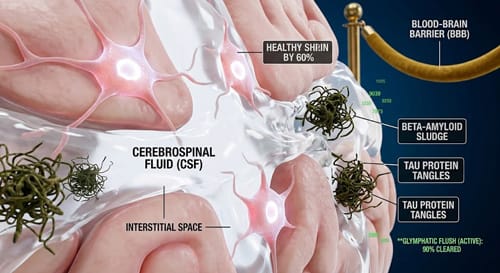
- The Nightly Power Wash: During deep sleep, brain cells shrink by 60%, allowing Cerebrospinal Fluid (CSF) to flush out toxins like Beta-amyloid and Tau protein.
- The 3D Visual Truth: In our simulations, staying awake keeps neurons packed tightly together, blocking the “detergent” flow and causing toxic “mountains” of sludge to stack up in the gaps.
- The Leaky Brain: This toxic buildup puts pressure on the Blood-Brain Barrier (BBB) until it physically fractures, allowing “body trash” to leak into your gray matter.
- The Risk: Even one night of sleep loss causes a massive spike in brain trash, directly linked to Alzheimer’s and permanent cognitive decline.
My 3D Discovery: Rendering the “Brain Sponge” in 4K
Honestly, when I was setting up the 3D lighting for this scene, it was fascinating to observe how cerebrospinal fluid actually moves. In our animation, we visualize the brain like a giant sponge. When you finally hit that deep sleep, the “sponge” (your neurons) shrinks and the “cleaner” (CSF) rushes in.
3D Observation: In the viewport, I spent quite a while tweaking that scene to show the gap widening by 60%. It looks like a high-speed “power wash” moving through a maze. Without that gap, the “detergent” simply can’t get in, and the toxic gunk—the Beta-amyloid—stays stuck like dried cement.
This mechanical failure is the exact opposite of what we see in the Sleep Deprivation: Brain Eating Itself guide—where instead of cleaning, the brain starts cannibalizing its own synapses just to clear a path.
The Glymphatic System: Your Brain’s Biological Detergent
According to the National Institute of Neurological Disorders and Stroke (NINDS), the glymphatic system is almost ten times more active during deep sleep than during wakefulness.
- The Shrinking Cell: During deep non-REM sleep, your brain cells physically pull back. This increases the interstitial space (the gaps between neurons).
- The Flush: CSF flushes through these widened gaps like a powerful detergent, creating subtle vortexes that carry away waste.
- The Sludge: We modeled Tau Protein Tangles and Beta-amyloid Sludge as dark, tangled green-brown formations. In a healthy “flush,” they are forcefully pushed out of the frame. In a sleep-deprived state, they stack up like mountains.
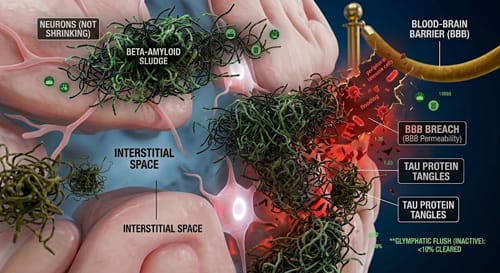
Table 1: Brain Waste Clearance vs. Wakefulness (3D Breakdown)
| Brain State | Glymphatic Activity (3D View) | Waste Clearance Rate | Cognitive Impact |
| Deep Sleep | Cells Shrunken 60%; High Flow. | Maximum (Power Wash). | High Alertness & Clarity. |
| Light Sleep | Cells partially shrunken. | Moderate (Surface Clean). | Mild “Brain Fog.” |
| Stay Awake | Cells Packed Tight; No Flow. | Stagnant (Toxic Buildup). | Cognitive Impairment. |
| Chronic Loss | Sludge Mountains forming. | System Failure. | Accelerated Neurodegeneration. |
The “Leaky Brain” and the BBB Breach
Think of the Blood-Brain Barrier (BBB) as a VIP velvet rope at an exclusive club. Prolonged accumulation of Tau and Beta-amyloid doesn’t just block neural signals; it physically stresses this barrier.
My 3D Observation: In our cross-sections, the pressure gets so intense that it physically fractures the BBB, seen as a jagged tear (BBB BREACH). You can see the aggressive red immune cells and toxic green waste “flooding” into the gray matter through the broken gate. This is what causes that “heavy head” feeling—it’s not just a buzz; it’s a security breach.
This security failure is a recurring theme in our Brain Damage From Drinking series—whether it’s alcohol or toxic waste, your brain’s “armor” has a breaking point.
The Vicious Cycle: Alzheimer’s and Brain Toxins
The link between brain toxins sleep deprivation and long-term disorders like Alzheimer’s is undeniable. Chronic buildup creates a cycle of destruction:
- The Build: Toxins accumulate in the Prefrontal Cortex.
- The Block: These toxins make it harder for the brain to enter deep sleep.
- The Fail: Less deep sleep means even less waste clearance.
- 3D Observation: We showed Tau Proteins as tangled, messy knots. Normally, they are like organized scaffolding, but without the nightly wash, they collapse into “neural traffic jams,” blocking nutrients from reaching the cell.
- External Evidence: A study in Science Magazine revealed that one night of sleep loss leads to an immediate increase in Beta-amyloid in the hippocampus. Science: Sleep Drives Metabolite Clearance.

FAQ: Brain Toxins & Glymphatic Health (USA Search Trends)
Q1: How does the brain remove toxins during sleep?
A: The brain uses the Glymphatic System. During deep sleep, the space between neurons expands by 60%, allowing cerebrospinal fluid (CSF) to wash away metabolic waste.
Q2: What is the link between sleep loss and Alzheimer’s?
A: Chronic sleep deprivation results in a permanent buildup of Beta-amyloid plaques, a key driver of Alzheimer’s disease. In our 3D render, these look like “dried cement” smothering your neural cables.
Q3: Can napping clear brain toxins?
A: Naps help with alertness, but the real “Power Wash” only happens during deep, slow-wave sleep cycles, which usually require longer sleep periods.
Q4: What does “brain fog” actually look like in 3D?
A: Imagine your neurons trying to fire electrical signals through thick, gray sludge. That “sludge” is the waste that didn’t get washed away because the pumps stayed off.
Q5: Does an “Arctic” bedroom help?
A: Yes! Keeping the room around 64°F (18°C) helps the brain reach the optimal temperature for the “Glymphatic Flush.”
Q6: Can 3D animation show the “Brain Sewage”?
A: Yes. We modeled the FAILED GLYMPHATIC FLUSH as a clogged, sludge-filled channel. It’s a physical visualization of why your head feels “heavy”—it’s quite literally full of trash.
How to Support Your Glymphatic System and Reduce Brain Toxin Buildup
Since your brain needs to physically shrink to let the cleaning fluid through, Americans are pivoting to these “Sleep Hacks”:
- The Magnesium Hack: It’s like a “chill pill” for your neurons, helping them relax and open the interstitial gaps.
- Pre-Sleep Hydration: You need fluid to make the “wash” work, but don’t overdo it—you don’t want to wake up for bathroom breaks and stop the cycle!
- Biological Darkness: Shift work and bright lights at night disrupt the Circadian Rhythm, making the flush less efficient.
Check out our Winter Skin Repair Guide for more on how the environment affects your body’s internal maintenance.
Conclusion: Prioritize Your Nightly Power Wash
Protecting your brain from toxin buildup is the most effective way to prevent future neurological disorders. Our 3D simulations show that your brain isn’t just a computer—it’s a high-maintenance machine that needs to be “washed” every 24 hours.
- The Reality: One night of wakefulness is like leaving wet leaves on a computer’s motherboard.
- The Fix: Ensure at least 7 hours of uninterrupted rest to give your “sewage system” the time it needs.
What “What If” should I render next? Let me know in the comments!
- Do you want to see a 3D view of “Sleep Apnea” and oxygen loss?
- Should we animate what happens to your brain during a 48-hour challenge?
Further Study & External Research
- National Institutes of Health (NIH): The Glymphatic System and Waste Clearance
- Alzheimer’s Association: Sleep and Brain Health Research
For more on how cells react to stress, see our previous article on Brain Eating Itself.
Research source: National Institute of Neurological Disorders and Stroke.
3D Simulation Specs & Observations
| 3D Component | Technical Visual Setting | Observation from Viewport |
| Framerate | 120 FPS High-Speed | Captured micro-movements of the mesh. |
| Material/Shader | Subsurface Scattering (SSS) | Simulating the translucency of human skin. |
| Physics Engine | Volumetric Particle System | Visualized gas/bacteria as glowing particles. |
| Goal | Entertainment / Curiosity | Purely a “What If” hypothetical scenario. |
Pingback: Sleep Deprivation Brain Eating Itself: 5 Scary Realities